What Does Thermoforming Tooling Cost? 6 Factors That Drive the Price
Part size, draw depth, tool material and volume all shape what you'll pay.
If you're pricing a new plastic part, tooling is usually the first big number you see. For thermoformed parts, that number is typically much lower than for an injection mold, but it still varies from part to part. Here's what drives the cost, and how to keep it in check.
Why thermoforming tooling costs less to begin with
Thermoforming heats a plastic sheet until it's pliable, then uses vacuum to pull it onto a single-sided mold. Injection molding forces melted plastic into a closed, two-sided mold under high pressure, so those molds are usually machined from steel or aluminum and take longer to build. A thermoforming tool only shapes one side of the part and doesn't have to hold injection pressure, which is a big reason it costs less and can be built faster.
1. Part size
Bigger parts need bigger tools, more material and more time to build and finish. That said, large parts are where thermoforming shines. Dashboards, consoles, panels and covers that would need a very large injection mold can often be thermoformed with a much smaller tooling investment.
2. Draw depth and shape
Deep draws, tight corners and complex shapes take more engineering to form with consistent wall thickness. The more the sheet has to stretch, the more the tool design matters. A simple, shallow part costs less to tool than a deep, detailed one.
3. Tool material
Thermoforming tools can be made from several materials, including 3D printed plastics, tooling board, fiberglass and machined or cast aluminum. Each one trades upfront cost against durability, cooling speed and surface finish. At Uniforce, we build handmade fiberglass tools in-house, typically in 3–5 days per tool, and they cost less than aluminum or steel molds.
4. Trimming and fixtures
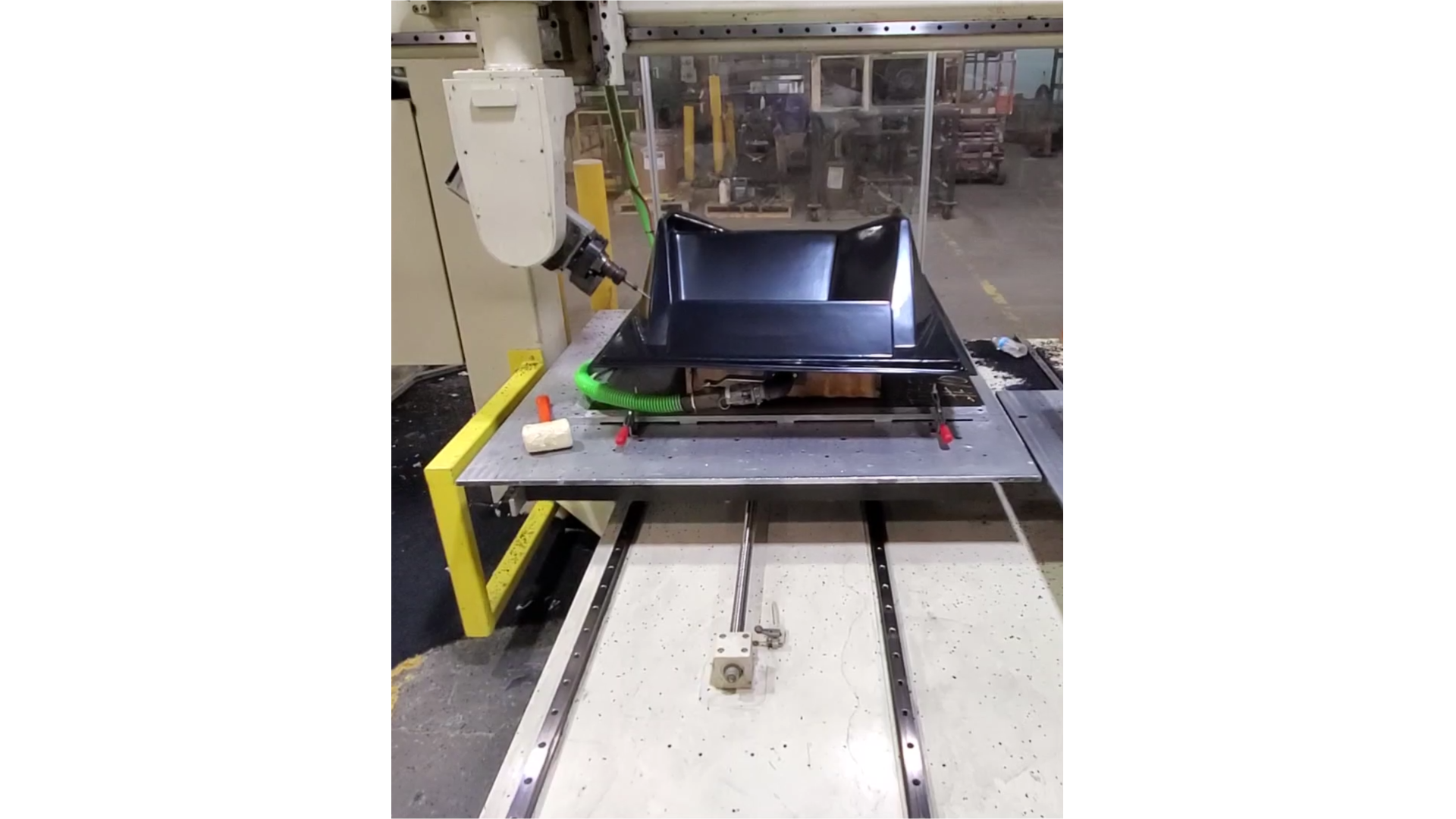
A formed part still has to be trimmed to its final shape, with holes and cutouts added. Trim fixtures and CNC or robotic trim programs are part of the startup cost. We trim with automated robotic cutting cells and 5-axis CNC machining for consistent, repeatable results.
5. Number of tools and design changes
An assembly with several formed pieces needs a tool for each one, and design changes after a tool is built add cost. Confirming fit early saves money, which is why we use large-format 3D printing for prototypes and fitment checks before production tooling.
6. Production volume
Tooling is a one-time cost spread across every part you make. Low volumes favor tooling that's fast and inexpensive to build, while higher volumes make more durable tooling easier to justify. For many mid- to high-volume programs, thermoforming is a cost-effective alternative to injection molding.
How to get an accurate tooling quote
The more we know up front, the more accurate the quote. When you reach out, include:
- Drawings or CAD files (PDF, STEP, DWG or DXF)
- Material, color and finish requirements
- Estimated annual volume
- How the part fits with mating parts or assemblies
- Your target timeline
Have a part in mind? Send us your drawings and our team will review your project and follow up with a quote.
Recent Posts