Thermoforming vs. Injection Molding: How to Choose for Your Next Part
Both make production plastic parts. The right choice depends on size, detail, volume and budget.
Thermoforming and injection molding both produce plastic parts at production scale, but they work very differently. The right choice comes down to your part's size and shape, the level of detail it needs, how many you'll make and how much you want to invest in tooling.
How each process works
Thermoforming heats a plastic sheet until it's pliable, then pulls it onto a single-sided mold with vacuum. Once it cools, the part is trimmed to its final shape. Vacuum forming is the most common type of thermoforming.
Injection molding melts plastic pellets and injects them under high pressure into a closed, two-sided mold. The part comes out close to its final shape, with detail on both sides.
How they compare
- Tooling: Thermoforming tools are single-sided and don't have to withstand injection pressure, so they cost less and are faster to build and modify. Injection molds are two-sided, usually machined from steel or aluminum, and take longer to make.
- Part size: Thermoforming handles large parts well, such as dashboards, consoles, panels and covers. Injection molding is best suited to small and medium parts.
- Detail: Injection molding can form fine features on both sides of a part, like ribs, bosses and snap fits. Thermoforming shapes one side, and wall thickness depends on how far the sheet is drawn.
- Cost per part: At very high volumes, injection molding's automation usually delivers the lowest cost per part. Thermoforming's lower startup cost often makes it the better value for large parts, and it remains a cost-effective alternative to injection molding for many mid- to high-volume programs.
- Design changes: Thermoforming tools are easier and less expensive to change when a design is updated.
When thermoforming is the better fit
- Large or deep-draw parts
- A smaller tooling budget or a faster path to first parts
- Prototype through mid- to high-volume production, especially when designs change from model to model
- Parts that will be trimmed, wrapped, wired or assembled with other components
When injection molding is the better fit
- Small, intricate parts
- Very high annual volumes
- Parts that need detailed features on both sides
How Uniforce approaches thermoformed parts
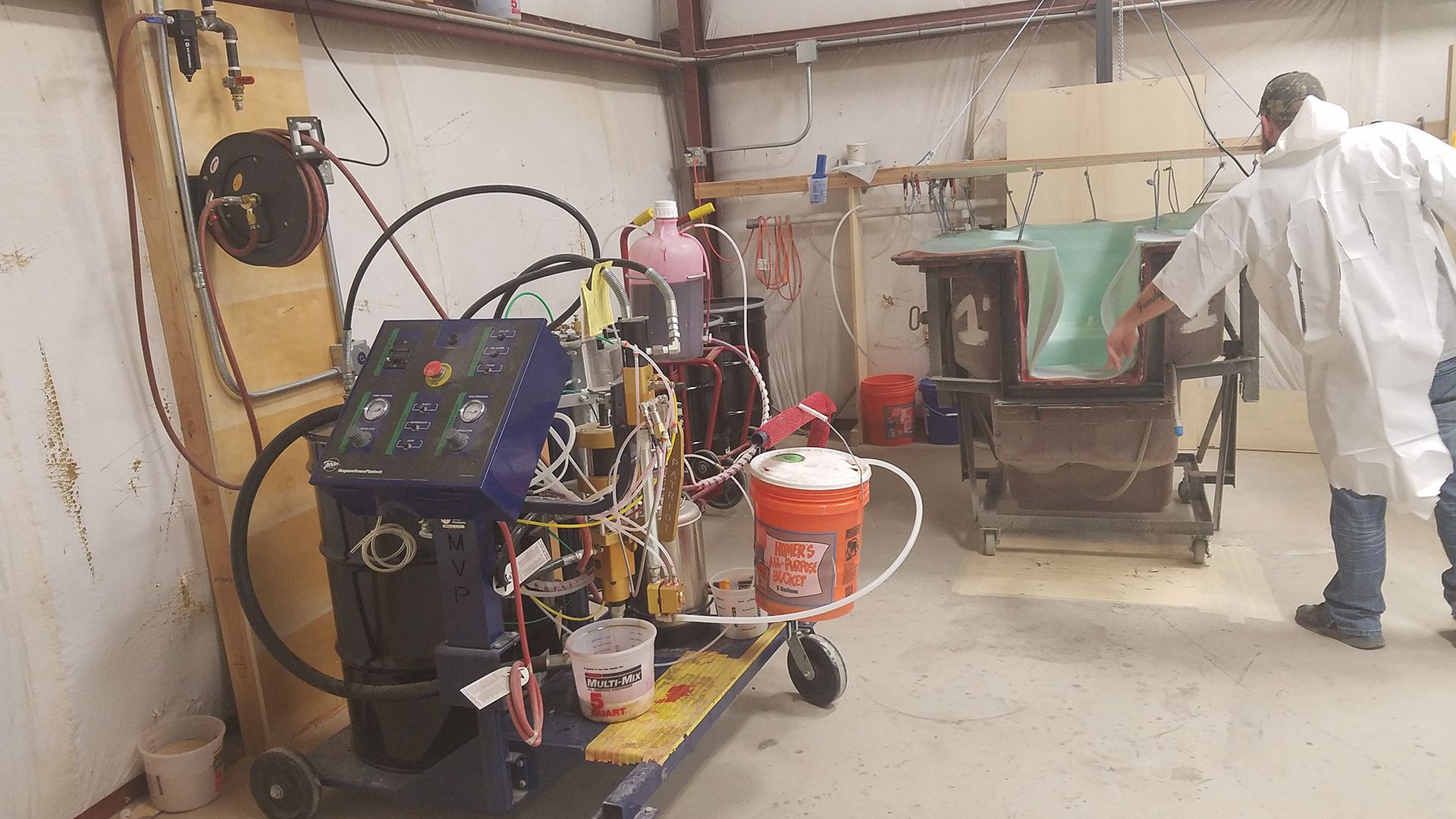
We thermoform and vacuum form large-format, deep-draw plastic parts for OEMs in marine, ATV/UTV, heavy vehicle and agricultural markets. Our handmade fiberglass tools typically take 3–5 days each and cost less than aluminum or steel molds. Parts are trimmed with robotic cutting cells and 5-axis CNC machining, and we can add marine-grade, hand-wrapped vinyl, wiring and electrical assembly in the same plant.
Not sure which process fits your part? Send us your drawings, and our team will help you weigh the options and follow up with a quote.
Recent Posts